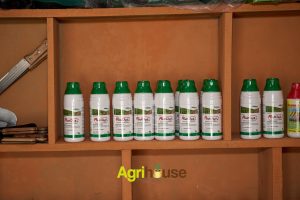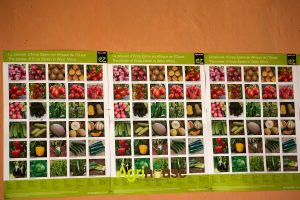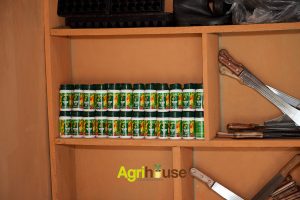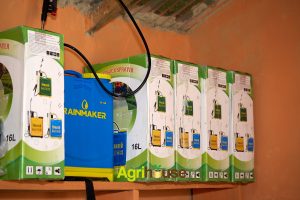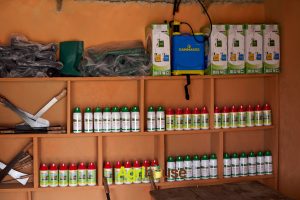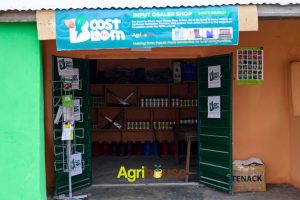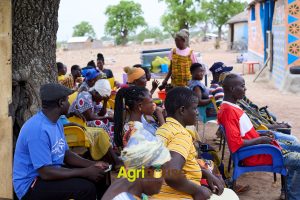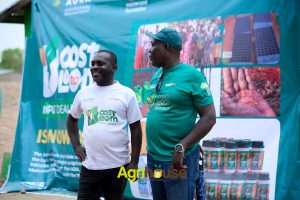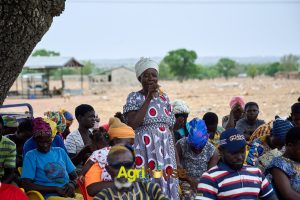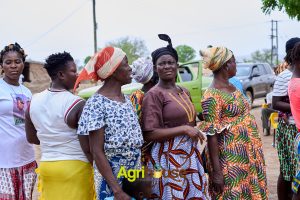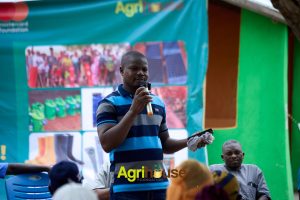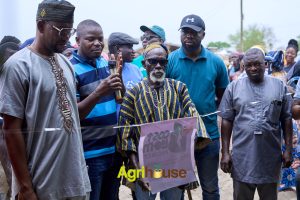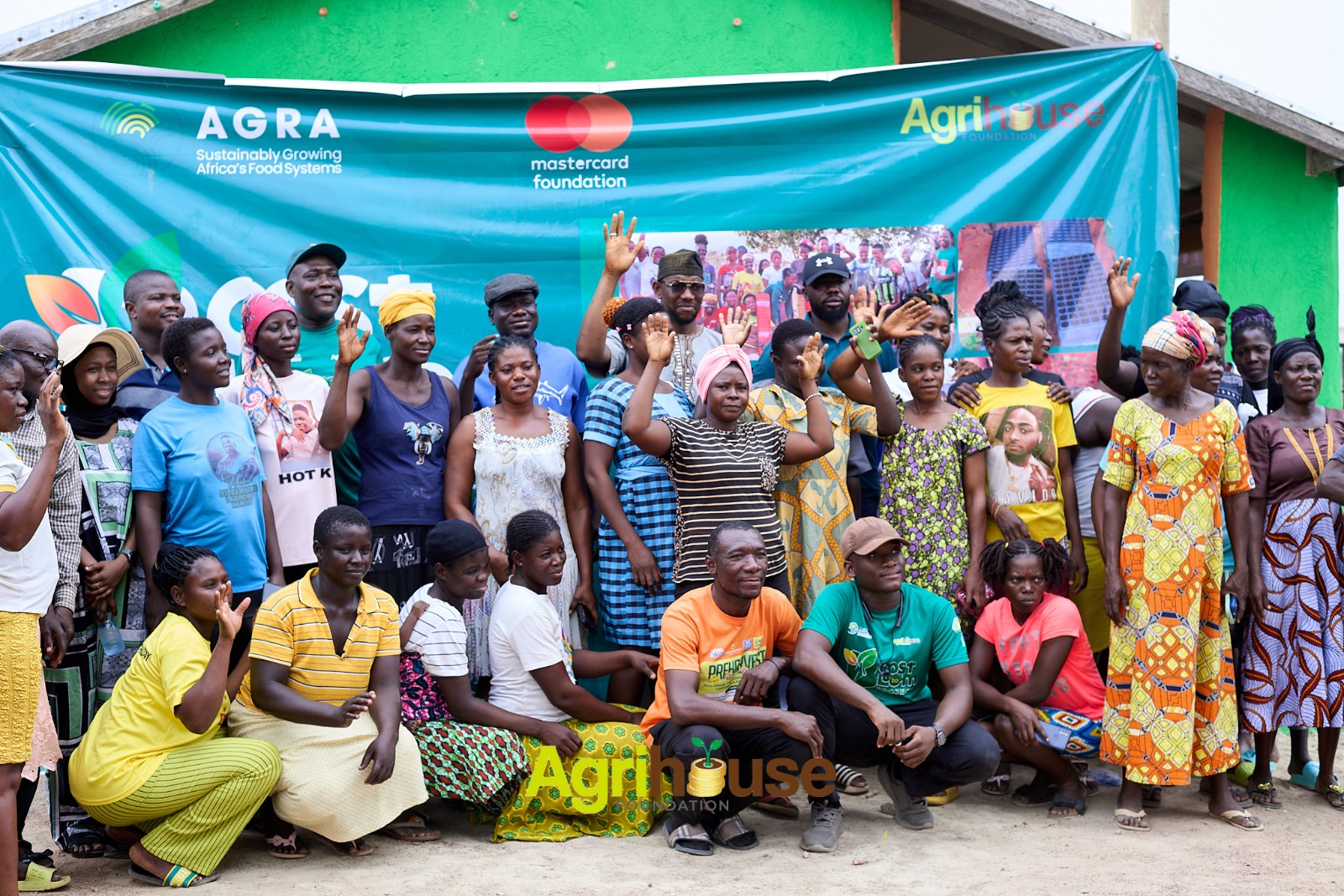
The first of ten agricultural input dealership shops under the Boost to Bloom project has been officially opened in Sakoti-Kotitabig in the Nabdam District of the Upper East Region.
The project, led by Agrihouse Foundation with support from AGRA and sponsorship from the Mastercard Foundation, provides training, mentorship, and free inputs to young women farmers. It aims to improve access to farm inputs, increase productivity, and support farming communities across northern Ghana.
At the commissioning, the Nabdam District Director of Agriculture, Imoro Rasheed, encouraged farmers in the area to take full advantage of the new facility to improve their farming activities.
He expressed appreciation to the project partners for bringing such an important service closer to rural farmers, noting that placing the shop in Kotitabig, instead of larger nearby towns, shows a clear effort to reach farmers at the grassroots level.
“This is a big relief for our farmers. They no longer have to travel 5 to 10 kilometers just to access farm inputs,” he said. “In the past, many had to wait for market days, sometimes four to six days, before they could travel long distances to buy what they needed.”
The Director urged farmers to use the shop regularly to increase their production. He stressed that proper use of the facility will help show positive results when the project is assessed after the farming season.
Mr. Rasheed further called on the project partners to expand the initiative to other communities in the district after seeing the impact of the first phase.
He advised farmers to seek guidance when buying and using farm inputs, explaining that with limited extension officers in the district, farmers should take advantage of the expertise available at the shop, especially since farming activities are time sensitive.
Gifty Tinpaka David, a beneficiary of the Boost to Bloom project, expressed her gratitude, saying the initiative brings farm inputs closer, significantly reducing the cost and risks of traveling long distances to other towns to purchase them. She described the project as life-changing, noting that it will go a long way in improving the livelihoods of women farmers in the area.
According to Sampana Faustina, the project is a salvation from unemployment. She added that they have already acquired knowledge and skills that are helping them in vegetable production. “Now we farm pepper and tomatoes for both commercial and household needs,”
She said the opening of the Boost to Bloom inputs dealership shop will help in the timely acquisition and application of farm inputs on their farms while thanking Agrihouse Foundation for bringing such an initiative to Kotitabig.
Meanwhile, the Executive Chair of Agrihouse Foundation, Alberta Nana Akyaa Akosa, said the Boost to Bloom project is a scale-up of the One Household, One Garden (1H1G) initiative. The project is targeting 20,000 young women and persons living with disabilities (PWDs) between the ages of 18 and 35, helping them create sustainable agri-business opportunities to improve their livelihoods.
She revealed that, under the Boost to Bloom project, these young women are being grouped into agribusiness networks and empowered through capacity building, coaching, mentorship, and training to equip them with agripreneurial skills.
On the Boost to Bloom inputs dealership Shop, the Executive Chair noted that ten input shops will be established across northern Ghana, with two shops in each region, focusing on addressing the inputs needs of deprived but hard-to-reach farming communities.
Accompanying the input shop is a farmer service/aggregation center that will offer technical assistance and market access for farmers. This is aimed at bringing agricultural inputs closer to the people, eliminating the risk and cost of travel, while providing timely inputs for rural farmers and creating dignified, sustainable agri-jobs.